As corporate landlords spread, a mold epidemic takes root
Chronic mold has become an epidemic as severe as lead paint, but neither cities nor landlords are taking responsibility. This is the story of the families breathing it — and the systems that let it happen.
A child who has never breathed clean air
In his nine months of life, an infant has been to the emergency room three times. The mold in the floorboards and walls of his apartment has been his companion since birth.
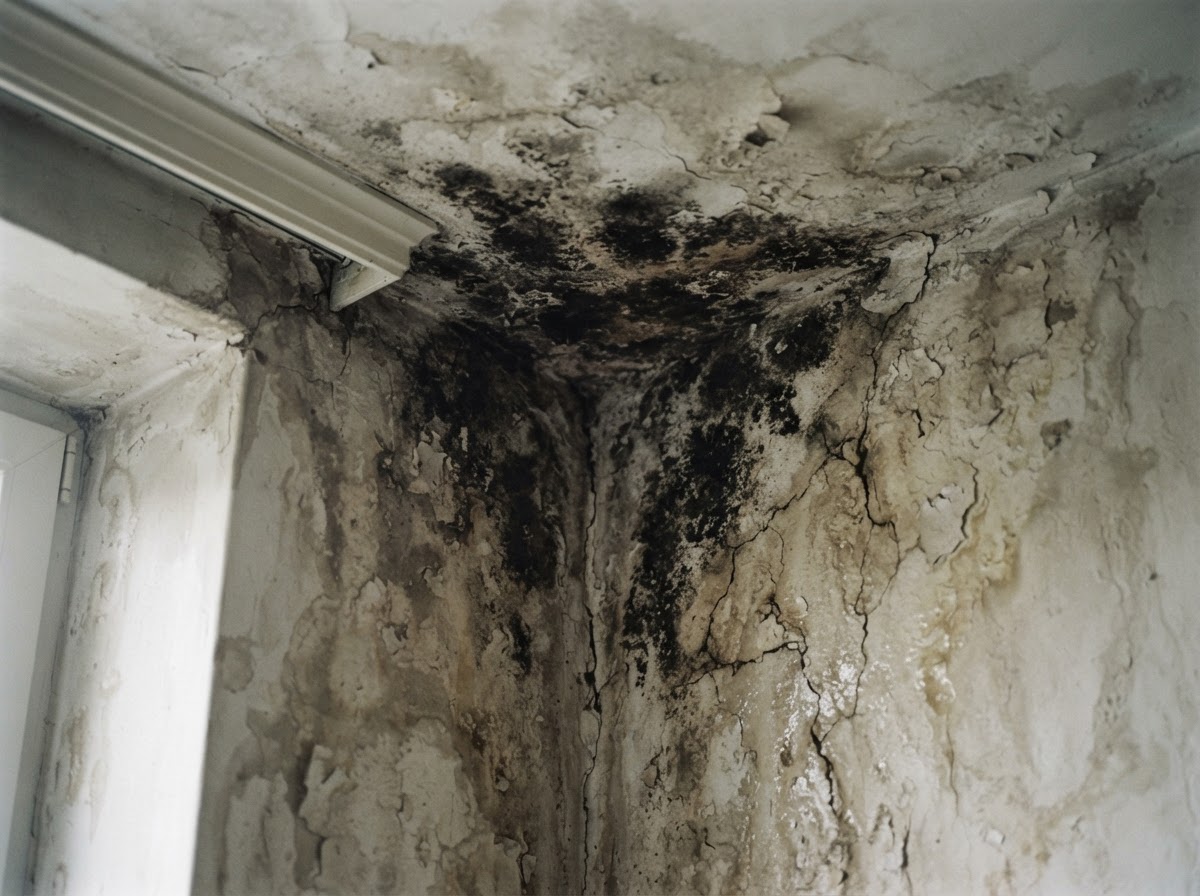
An eight-months-pregnant mother moved into a 312-unit low-income complex in the northeast corner of a New England city. She found mold that same day — and a bucket in the laundry room next door, filled to the brim with water dripping from the ceiling.
Within weeks of bringing her newborn home, the conditions sent him back to the hospital. "The wall, the door, the floor — everything is full of mold," she said.
A few buildings over, a ten-year-old takes constant puffs of an inhaler to keep her asthma under control. Down the asphalt driveway, a one-year-old boy — who, like the infant, has lived in the complex his whole life — was diagnosed with asthma in February.
The wall, the door, the floor — everything is full of mold.
An epidemic as severe as lead paint
Housing conditions have long driven this country's health crises. In 1978, the federal government banned lead-based paint. Mold has yet to receive anywhere close to the same attention.
While studies connecting mold, housing, and health date back to at least the 1950s, mold did not appear on the federal housing inspection checklist — used to force landlords to resolve health and safety issues — until 2023.
For years prior, the Department of Housing and Urban Development gave passing grades to buildings with toxic mold. Mold outbreaks have historically been allowed free rein across low-income housing, from private to public, locally owned to nationally owned.
And unlike lead, the rate of mold infestation is heading in the wrong direction. As climate change batters coastal cities with increasingly intense rainstorms and flooding, all that extra water ends up somewhere — often in the ceilings, walls, and floorboards of tenants.
Technically, you're suffocating. People describe asthma as having an elephant sitting on your chest.
The corporate landlords who look away
As corporate landlords buy up rental housing, research shows they have poorer maintenance records. In cities where most residents rent and half the housing predates 1940, the result is a perfect storm.
By the end of 2020, corporate entities like LLCs owned at least 44% of US rental housing, and that share is still growing. Studies in Wisconsin and New York have shown LLC-owned properties to be less likely to be up to code and faster to deteriorate.
One out-of-state private equity firm acquired more than 4,400 affordable housing units in a single year — among the highest acquisition rates of any US landlord. Reports of complaints at its buildings emerged in local media across the country, from Washington, D.C., to New Orleans to Chicago.
Tenants say the most management typically does is send staff in with a spray bottle and fresh paint to cover up the spots. One tenant said maintenance arrived with a bottle that prominently read "Not for use for the coverage of mold," even as the worker told her it would kill it all.
Every window you fix cuts into your bottom line. When you look at people as your bottom line, it's never going to work unless the government gets involved.
The city that fails to follow through
When landlords leave tenants in unsafe conditions, the city's housing code enforcement agency is the government's response. Tenants and lawyers describe an agency that is woefully understaffed and rarely returns.
After months of asking the landlord for help, one mother called the city's code enforcement agency. The next morning, an inspector failed the apartment for eight separate violations — damp walls, lack of weatherproof windows, and an order to "rid wall of black like substance."
The landlord was given three weeks to fix the violations. But nearly three months later, the agency had neither gotten back in touch nor returned to reinspect. The infant was still breathing mold and had wound up in urgent care yet again.
"If you're lucky, you get in touch with someone and the inspector comes out," a housing attorney said. "If you're lucky, they write the report and you actually get a copy of it. If you're lucky, they get it to the landlord."
My kid was hospitalized three times in a row and I lost my job because of this bad housing.
What needs to change
The pathway from poor housing to poor health is clear. What is missing is accountability — from the landlords who minimize repairs to protect their bottom line, and from the governments that fail to enforce the standards already on the books.
Mold remediation is not cosmetic. It means finding the source of the water, relocating tenants when necessary, and tearing into the roof and walls to do it for real. A spray bottle and fresh paint is not remediation.